An alternate timeline for Mariam, from A Thousand Splendid Suns
Books That Rewired Me — The Aiza
Every great tragedy has a hinge, one small moment where, if a single thing had gone differently, an entire life might have turned another way. In A Thousand Splendid Suns, that hinge is a letter. A letter from a father to a daughter, written with things he never had the courage to say out loud, arriving decades too late to change anything at all.
I couldn’t stop thinking about that letter after I finished the book. So instead of writing another review of the story as it happened, I wanted to sit inside the story that didn’t , the one where the letter arrives on time.
This isn’t a rewrite of Hosseini’s novel. It’s a reflection, a “what if,” written by a reader who couldn’t quite let Mariam go.
If the Letter Had Come When She Was Fifteen
Picture it differently. The same girl, the same longing, the same nights spent waiting by the roadside for a father who never quite showed up the way he should have. But this time, the letter reaches her before everything else has already been decided.
In that version, Mariam reads her father’s words not as an old woman piecing together the wreckage of her life, but as a young girl still capable of believing things could be repaired. Maybe those words are enough to keep her from the decision that changes everything, the one that sends her, still a teenager, into a marriage she never should have had to enter. Maybe, with her father’s acknowledgment finally in hand, she chooses to stay a little longer in the only home that ever felt like hers, however imperfect it was.
It’s a small shift. But small shifts, as this book teaches us more clearly than almost any other, are everything.
A Different Kind of Ordinary
In this alternate version, I imagine an older Mariam who never has to meet Laila the way she does in the real story, not because their paths never cross, but because neither woman is forced into the same house by the same man, under the same unbearable circumstances. Maybe they simply pass each other in a marketplace once, two strangers with no idea how close their lives came to being permanently entwined.
It’s strange to imagine a version of this story where Mariam gets to have an ordinary life. Not extraordinary, not tragic, just ordinary. A version where her courage never has to be tested in the way it eventually is, because she’s never pushed to the edge that demands it. In some ways, that imagined ordinariness feels like the greatest gift I could give her, more than any dramatic happy ending. Just… a life. Undisturbed. Unremarkable. Hers.
Why the Real Story Still Wins
And yet here’s the strange part. As much as I wanted to rescue Mariam from her fate, sitting with this alternate timeline made me appreciate the real one even more.
Because the truth is, if the letter had arrived on time, we would have lost the Mariam the book actually gives us, the one whose courage is forged, painfully, out of everything she survives. The alternate version might be kinder to her. But it would also erase the very thing that makes her unforgettable: a woman who starts the story as someone easily discarded, and ends it as someone whose choices ripple through another woman’s entire future.
The real tragedy of that letter isn’t just that it arrived too late for Mariam’s happiness. It’s that it arrived too late to spare her, but exactly in time to still matter, to still mean something, even after everything. That’s the detail I can’t shake. Hosseini didn’t give her closure. He gave her something more complicated: the truth, right at the moment it could no longer undo the past, but could still, somehow, be received.
What This Exercise Taught Me
I think part of why A Thousand Splendid Suns affected me so deeply is exactly this, it doesn’t let you look away from how differently things could have gone. Every reader who finishes this book probably runs some version of this same alternate timeline in their head, wondering where the hinge was, wondering what one different choice might have spared these women.
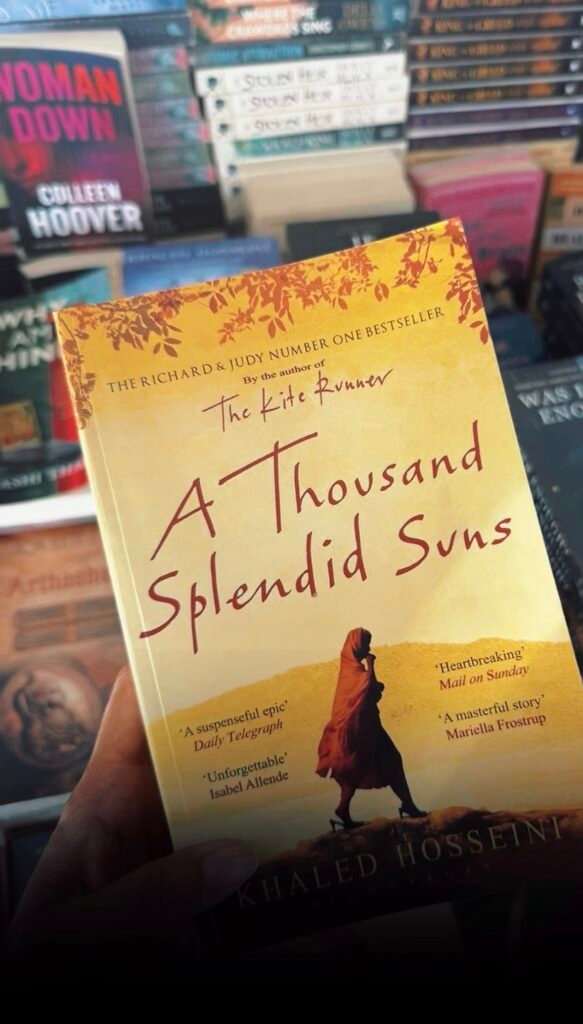
But maybe that’s the point. Maybe Hosseini wants us sitting exactly here, grieving the life Mariam could have had, while still being unable to imagine the story without the one she actually lived.
This is a piece from Books That Rewired Me, a series on The Aiza about books that changed how I see things — sometimes through a straightforward reflection, and sometimes, like this one, by imagining the story that almost was.