On Dostoevsky’s White Nights
Books That Rewired Me — The Aiza
There’s a small, quiet detail in White Nights that I didn’t notice until I was already halfway in love with the story, the narrator never gets a name.

For four nights, we live entirely inside his head. We feel his loneliness, walk beside him, quietly and completely, for a woman he barely knows. And yet Dostoevsky never once tells us who he is. He remains simply “the dreamer”, a man defined not by a name, but by an ache.
Meanwhile, she is named again and again. Nastenka. It appears on almost every page, said by him, said to her, said as if saying it enough times might make her stay. The imbalance is so deliberate it almost hurts once you notice it. He is nobody. She is the only somebody in his entire world.
A Loneliness You Can Feel on the Page
What struck me most is how completely Dostoevsky lets us sit inside this man’s isolation before Nastenka ever appears. He wanders the city at night, talking to buildings like they’re old friends, admitting almost proudly, almost sadly, that he has no real people in his life. Not enemies, not close friends, nobody. Just the city itself, and his own restless, over-imagining mind.
It’s such a specific kind of loneliness, not dramatic, not tragic in an obvious way, just quiet and persistent, the kind that doesn’t announce itself but simply sits in every sentence. I think anyone who has ever felt invisible in a crowded place will recognise something of themselves in him, even if the rest of his life looks nothing like their own.
Four Nights of Happiness
And then Nastenka happens to him. Almost by accident, a chance meeting on a bridge, a moment of vulnerability, a conversation that shouldn’t have gone anywhere but somehow does.
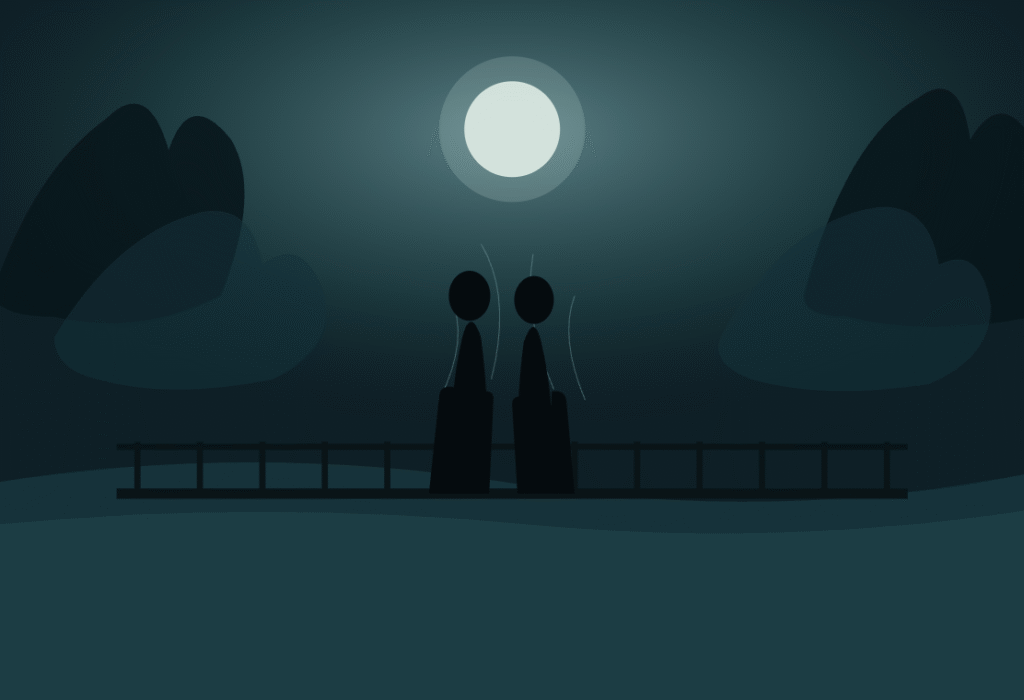
What I loved most is how happy those four nights make him. Not happy in a loud, obvious way, but in the quiet, disbelieving way of someone who has been alone for so long that ordinary companionship starts to feel like a miracle. He listens to her, tells her his own story, lets himself hope in a way he clearly hasn’t allowed himself to hope in years. For those few nights, his entire loneliness seems to lift, simply because someone finally sees him.
It’s a kind of happiness that’s almost painful to read, because you know, even as it’s happening, how fragile it is.
Not Her Fault
Here’s the part I keep coming back to: Nastenka never deceives him. She’s honest with him from very early on, about her heart already belonging to someone else, about what she can and can’t give him. She isn’t cruel, and she isn’t careless. If anything, she’s kind to him in a way few people have probably ever been.
And yet, of course, it still ends the way it has to end. He still loses what he never really had. But what makes the story so quietly devastating is that there’s no villain in it. Nastenka doesn’t do anything wrong. She’s simply someone else’s, and he’s simply someone who let himself hope anyway, knowing somewhere underneath the hope, how it would probably go.
That’s what makes this book stay with you longer than a typical heartbreak story might. There’s no one to be angry at. There’s only two people who wanted different things from the same few nights, and a dreamer who chose to be happy anyway, for as long as happiness was available to him.
Why It Stayed With Me
I think what White Nights really taught me is that some of the most complete happiness in life can exist inside something that was never going to last and that doesn’t make it any less real while it’s happening. The dreamer knew, on some level, that this couldn’t become permanent. He let himself feel it fully anyway.
Maybe that’s the quiet lesson underneath the whole book. Not every beautiful thing needs a future to be worth having. Sometimes four nights are enough to change how someone sees their entire life.
This is a piece from Books That Rewired Me, a series on The Aiza about books that changed how I see things. If a story has ever stayed with you the way White Nights stayed with me, I’d love to hear about it.